
Ingredients
Equipment
Method
Step 1 — Sauté aromatics
- Heat olive oil over medium heat in a large soup pot.
- Add the onion, carrots, and celery. Cook for 6–7 minutes until soft and fragrant.
- Add minced garlic and cook for 1 minute.
Step 2 — Add tomatoes & seasonings
- Pour in the diced tomatoes.
- Add oregano, basil, thyme, salt, and black pepper.
- Stir well to coat the vegetables with herbs.
Step 3 — Add potatoes & broth
- Add diced potatoes and pour in the vegetable broth.
- Stir and bring the mixture to a gentle boil.
Step 4 — Add beans & zucchini
- Once boiling, add kidney beans, cannellini beans, and chopped zucchini.
- Reduce heat and simmer for 15–18 minutes, or until the potatoes are tender.
Step 5 — Add pasta
- Stir in the small pasta.
- Simmer for another 8–10 minutes, or until the pasta becomes soft.
Step 6 — Add spinach
- Add the baby spinach and let it wilt for 1–2 minutes.
Step 7 — Taste & adjust
- Add more salt, pepper, or herbs as needed.
Step 8 — Serve warm
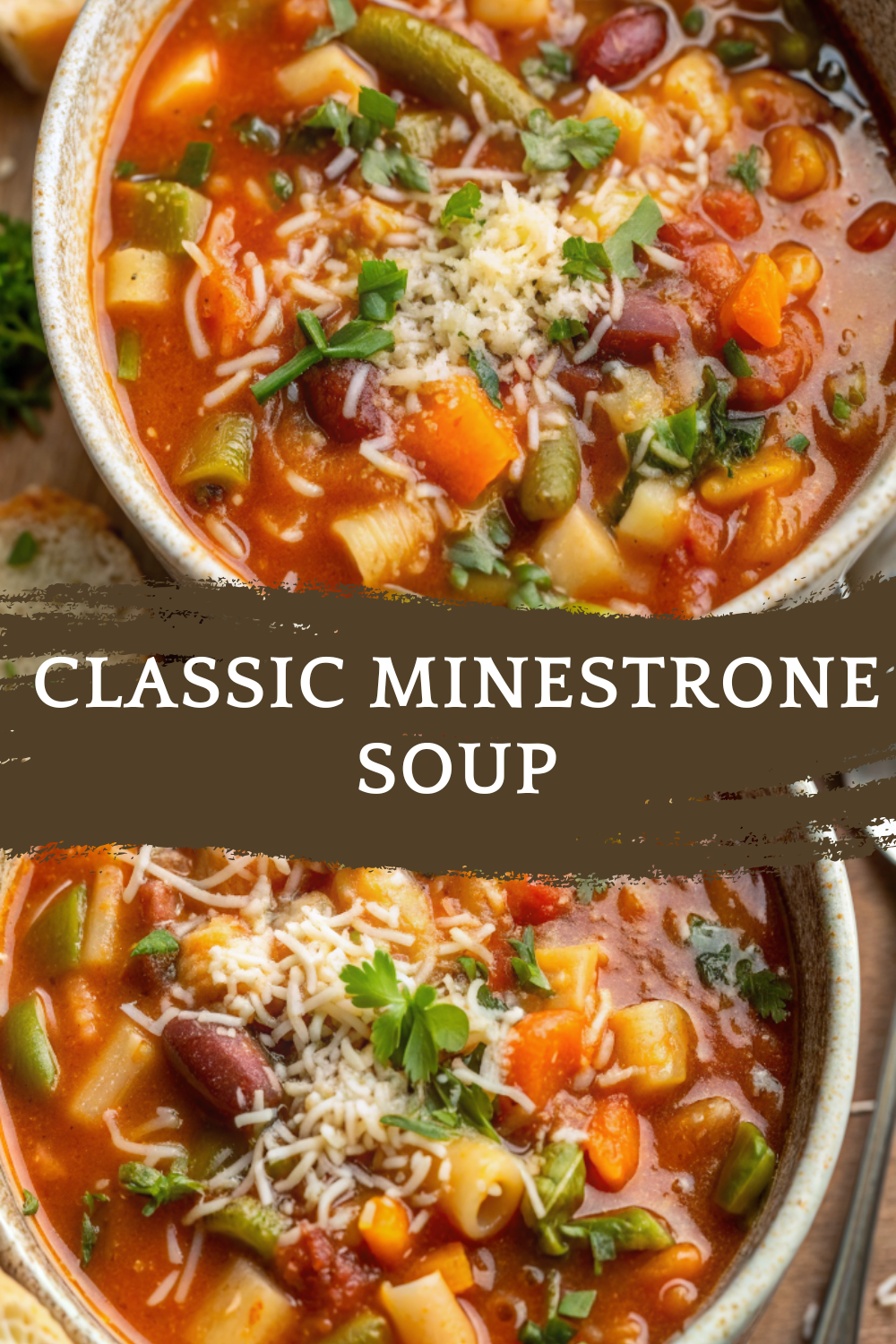
- Ladle into bowls and enjoy a hearty, flavorful Italian classic.
Notes
🧊 Storage & Reheating
Refrigerator Store for 4–5 days in an airtight container. Freezer Freeze without pasta for up to 2 months
(add cooked pasta after reheating). Reheating Warm gently on the stove, adding broth if needed. Pasta absorbs liquid, so add extra broth to thin the soup. 🥄 Variations
1. Minestrone with Rice Replace pasta with cooked rice. 2. Creamy Minestrone Add ½ cup coconut milk for a creamy texture. 3. High-Protein Version Add chickpeas or more beans. 4. Spring Minestrone Use peas, asparagus, and fresh herbs. 5. Winter Minestrone Use kale, squash, and extra potatoes. 6. Gluten-Free Minestrone Use gluten-free pasta or rice. 7. Spicy Minestrone Add red pepper flakes for heat. 8. Tomato-Rich Minestrone Add tomato paste for a deeper flavor. 9. Basil Pesto Minestrone Stir in a spoon of pesto (no cheese if vegan). 10. Brothy Minestrone Add more vegetable stock for a lighter soup. ❓ 10 FAQs
1. Does minestrone always include pasta? Traditionally yes, but rice or potatoes also work. 2. Can I use fresh tomatoes? Yes — use 2–3 large tomatoes, chopped. 3. Can I make this soup gluten-free? Absolutely. Use gluten-free pasta or rice. 4. Can I use frozen vegetables? Yes — add them during the last few minutes of cooking. 5. Can I cook pasta separately? Yes — perfect for meal prep. 6. Can I add meat? Use chicken breast or turkey to keep it healthy. 7. Is minestrone vegan? Yes — this version is naturally vegan. 8. Can I use broth instead of stock? Yes — both work well. 9. How do I make it thicker? Mash some beans and stir them back into the pot. 10. What goes well with minestrone? Garlic bread, salad, or toasted baguette. 🏁 Conclusion This Classic Minestrone Soup is everything a comforting Italian soup should be — hearty, flavorful, colorful, and full of nourishing ingredients. With a blend of vegetables, beans, pasta, and herbs, it’s the perfect cozy bowl for any season, especially when you need something warm and satisfying. It’s wholesome, easy to prepare, beautifully balanced, and endlessly adaptable. Whether you enjoy it for meal prep, family dinners, or as a light yet hearty lunch, this soup brings delicious Italian comfort every time.
Refrigerator Store for 4–5 days in an airtight container. Freezer Freeze without pasta for up to 2 months
(add cooked pasta after reheating). Reheating Warm gently on the stove, adding broth if needed. Pasta absorbs liquid, so add extra broth to thin the soup. 🥄 Variations
1. Minestrone with Rice Replace pasta with cooked rice. 2. Creamy Minestrone Add ½ cup coconut milk for a creamy texture. 3. High-Protein Version Add chickpeas or more beans. 4. Spring Minestrone Use peas, asparagus, and fresh herbs. 5. Winter Minestrone Use kale, squash, and extra potatoes. 6. Gluten-Free Minestrone Use gluten-free pasta or rice. 7. Spicy Minestrone Add red pepper flakes for heat. 8. Tomato-Rich Minestrone Add tomato paste for a deeper flavor. 9. Basil Pesto Minestrone Stir in a spoon of pesto (no cheese if vegan). 10. Brothy Minestrone Add more vegetable stock for a lighter soup. ❓ 10 FAQs
1. Does minestrone always include pasta? Traditionally yes, but rice or potatoes also work. 2. Can I use fresh tomatoes? Yes — use 2–3 large tomatoes, chopped. 3. Can I make this soup gluten-free? Absolutely. Use gluten-free pasta or rice. 4. Can I use frozen vegetables? Yes — add them during the last few minutes of cooking. 5. Can I cook pasta separately? Yes — perfect for meal prep. 6. Can I add meat? Use chicken breast or turkey to keep it healthy. 7. Is minestrone vegan? Yes — this version is naturally vegan. 8. Can I use broth instead of stock? Yes — both work well. 9. How do I make it thicker? Mash some beans and stir them back into the pot. 10. What goes well with minestrone? Garlic bread, salad, or toasted baguette. 🏁 Conclusion This Classic Minestrone Soup is everything a comforting Italian soup should be — hearty, flavorful, colorful, and full of nourishing ingredients. With a blend of vegetables, beans, pasta, and herbs, it’s the perfect cozy bowl for any season, especially when you need something warm and satisfying. It’s wholesome, easy to prepare, beautifully balanced, and endlessly adaptable. Whether you enjoy it for meal prep, family dinners, or as a light yet hearty lunch, this soup brings delicious Italian comfort every time.